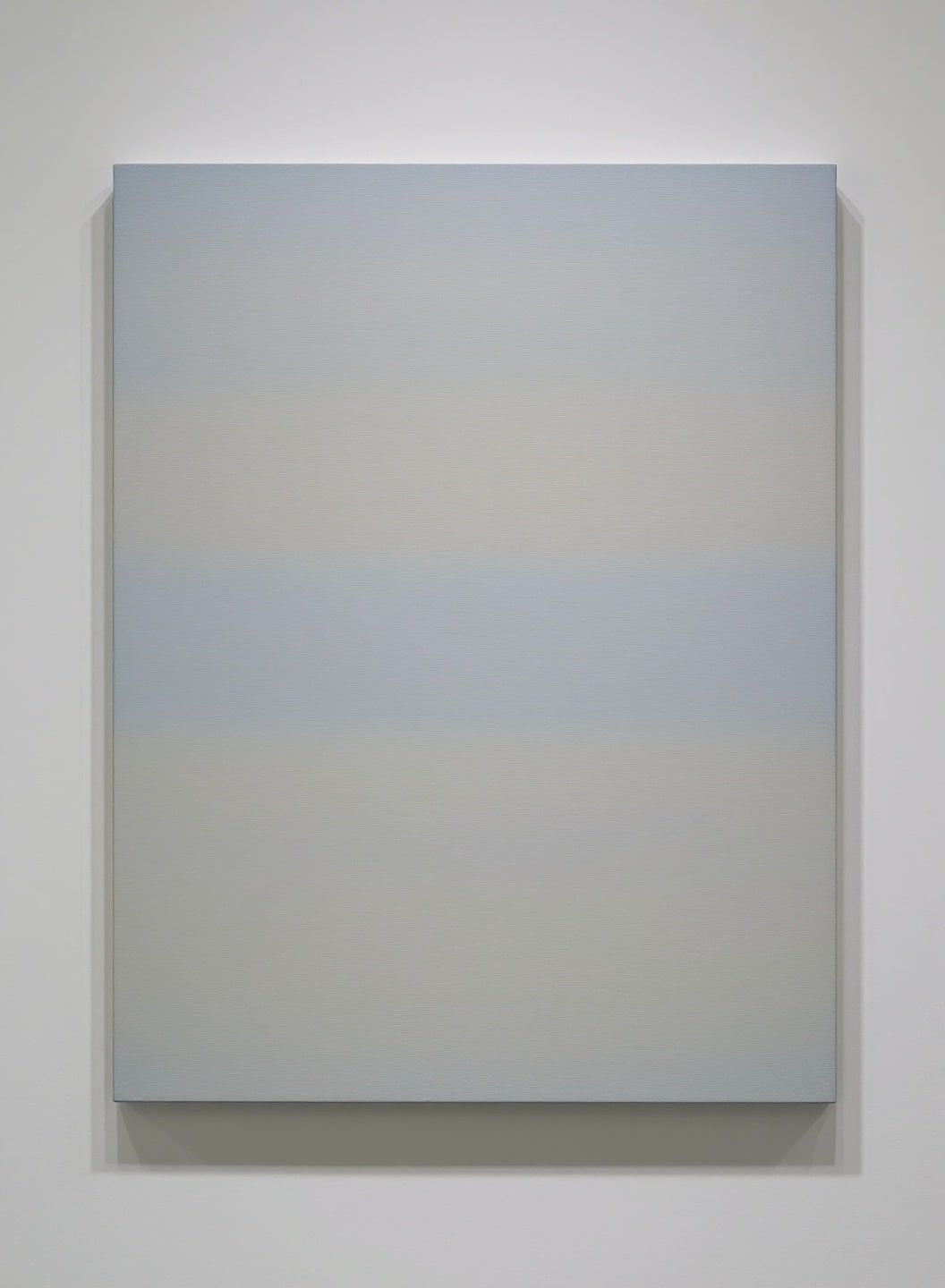
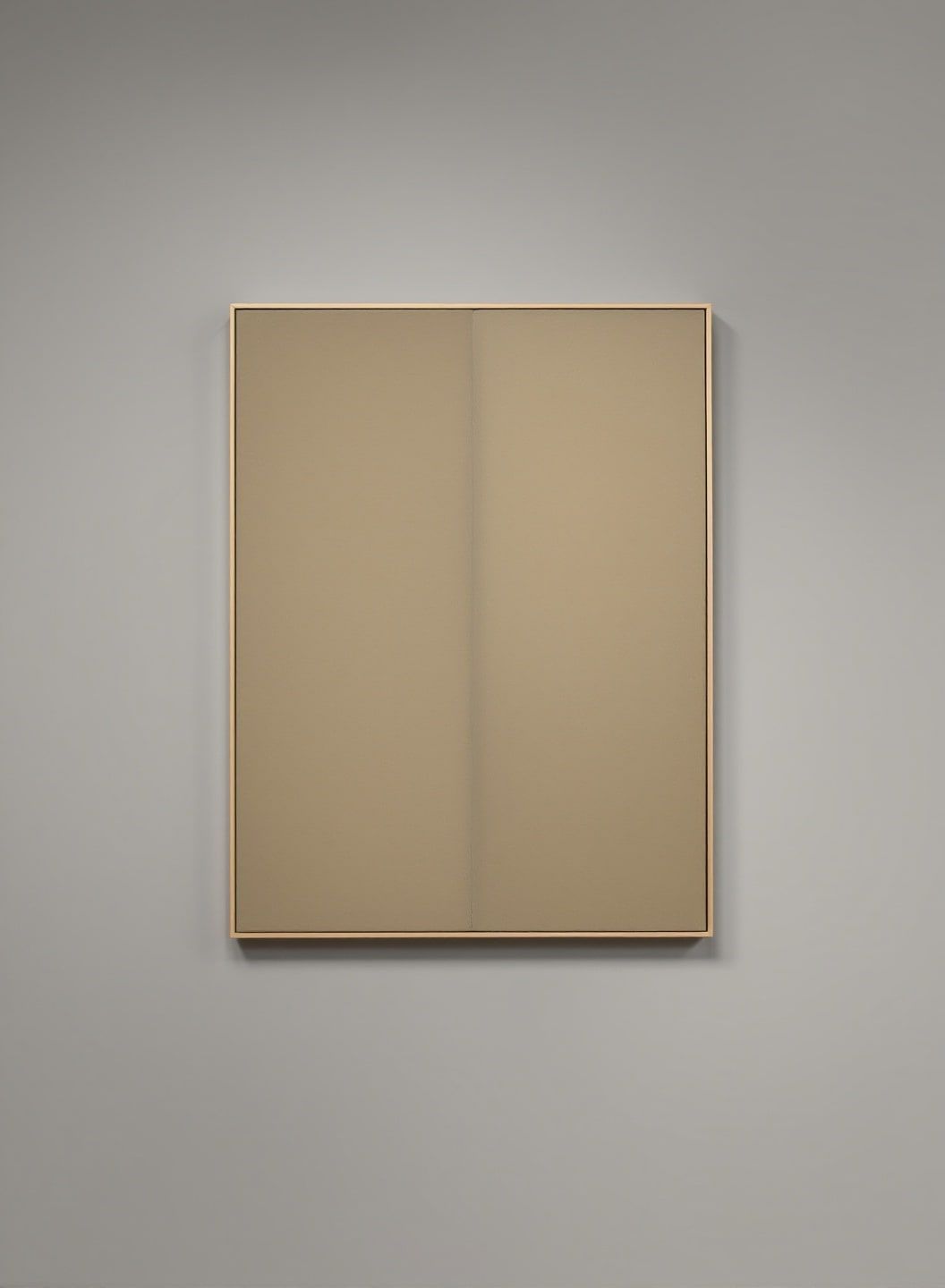
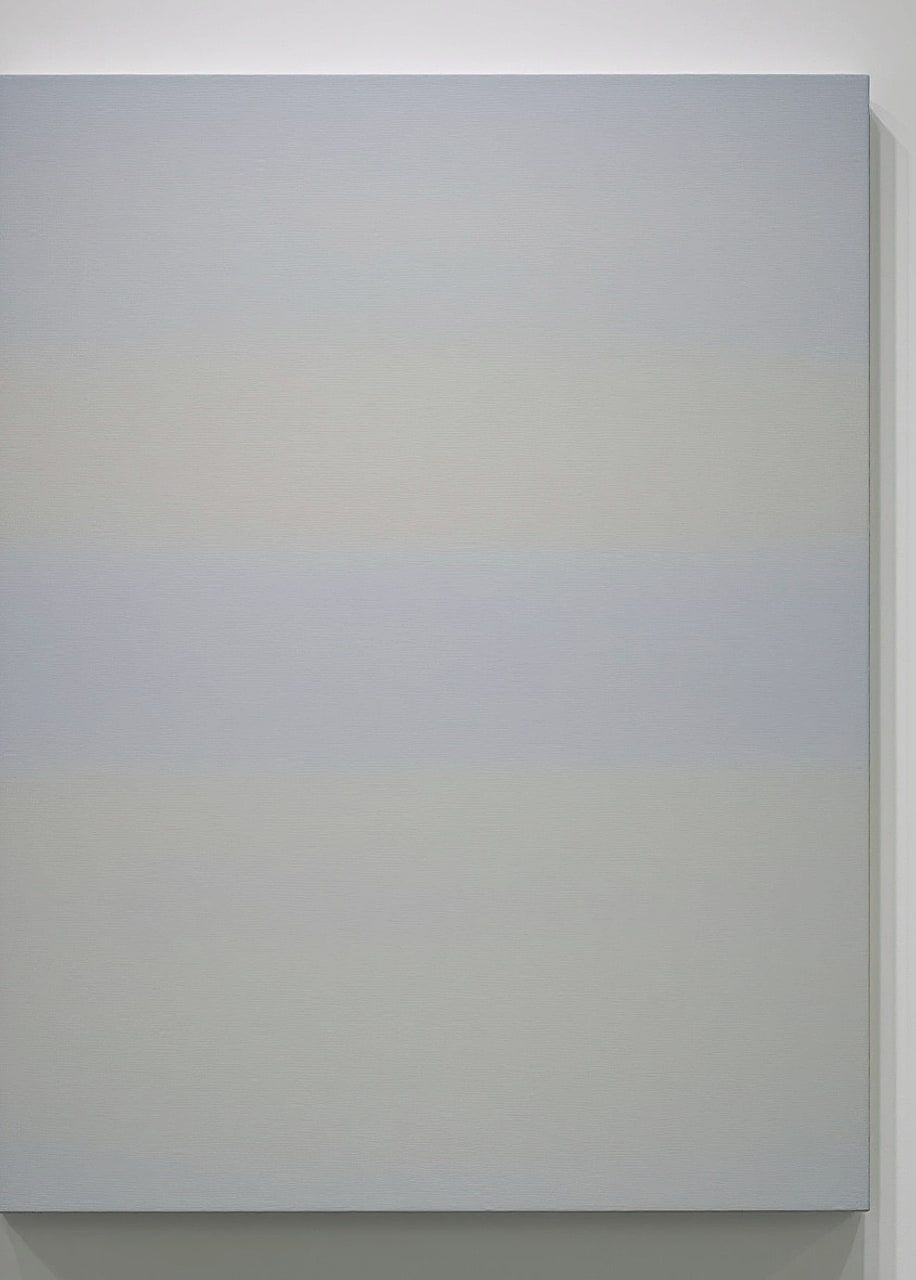
Wies Doorn: The Grey Years, 1962 to 1971
Wies Doorn made around a hundred and forty paintings between 1962 and 1971 and then stopped for the remaining thirty-three years of her life. This exhibition, organised with the Estate of Wies Doorn, brought together twenty-two canvases, eleven of which had not been shown since the 1960s.
Doorn worked in a room above a bicycle shop on the Oudegracht in Utrecht. The room was narrow. She could not step back more than about two metres from a canvas of any size, and the paintings carry the evidence of this: the soft vertical divisions never quite align with the edges of the stretcher, and the composition sits fractionally wrong inside its own frame. Critics in the 1960s read the misalignment as a considered response to the Dutch tradition of the divided plane. Doorn, on the two occasions she was asked, said it was the room.
The colour is grey throughout, mixed by hand from lead white, lamp black and small quantities of raw umber. There is no other pigment in the surviving work. What she extracted from that range across nine years is the whole content of the exhibition, and it is considerable: the 1962 canvases are cool and slightly blue, the 1966 group is warm to the point of looking brown in low light, and the last paintings of 1971 are almost without hue at all.
She left painting to teach at the Rietveld Academie, where she stayed for twenty-six years, and she never gave a reason. Former students describe her as entirely willing to discuss anyone’s work but her own. When the estate was catalogued in 2019, no unfinished canvases were found and no materials had been kept.
The gallery has represented the Estate of Wies Doorn since 2021. A catalogue with an essay by Hanneke Sluijter accompanies the exhibition.