Load-Bearing
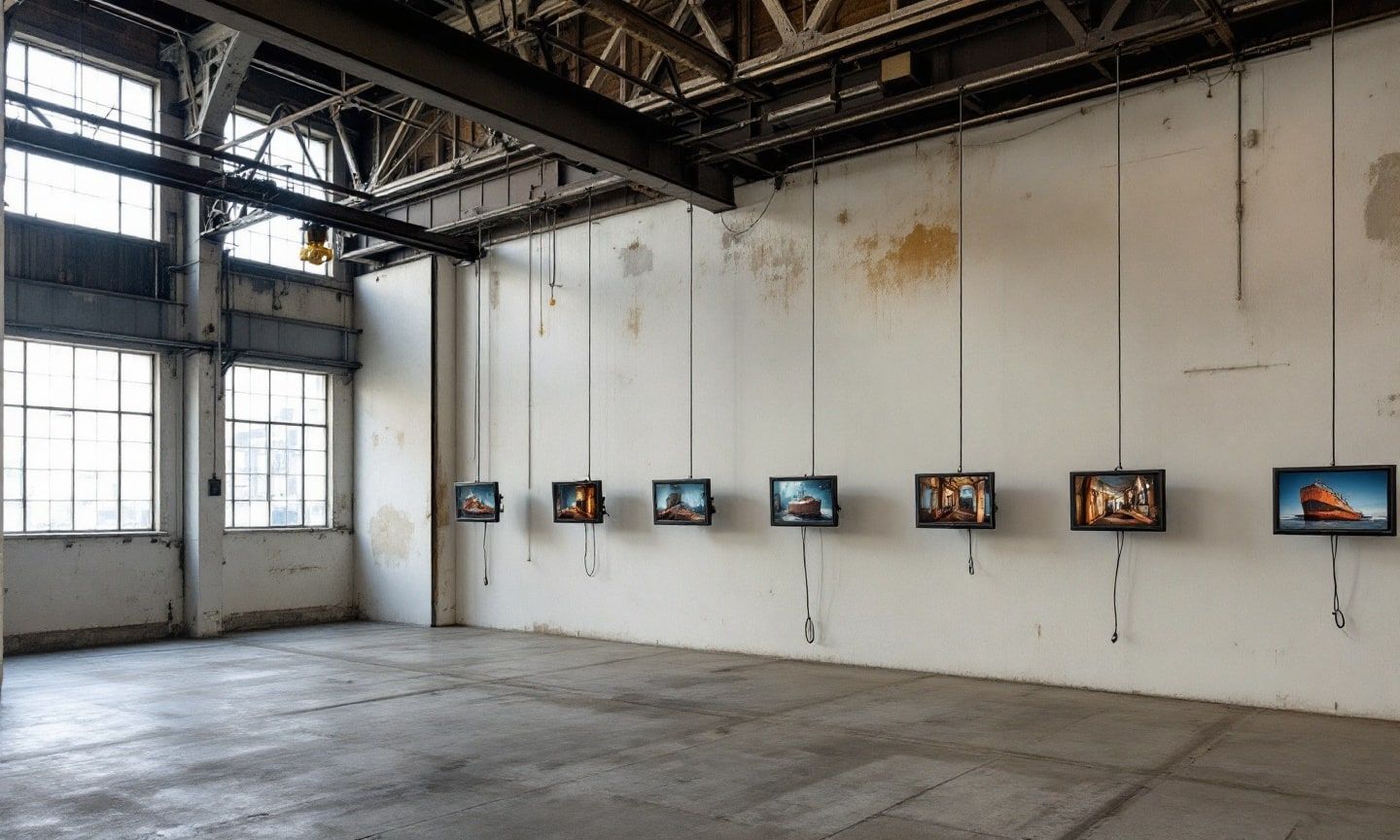
Kester Ellul’s first solo exhibition with the gallery filled the wharf hall at Borry Noord with nine monitors and a forty-seven minute loop assembled entirely from maritime insurance footage.
The source material is not made to be looked at. Hull surveys, cargo damage assessments and the video record filed when a vessel touches a quay too hard are produced as evidence, which means they have no framing, no editing and no assumed viewer. Ellul acquires the footage through a broker in Piraeus and through freedom of information requests to European port authorities, a process that in one case took nineteen months.
He keeps the original audio, which is nearly always a single surveyor speaking to themselves, and cuts the picture to the rhythm of that voice. The result behaves more like radio than documentary. Somebody describes corrosion in a flat procedural register while the image moves through spaces that were recorded only to establish who pays.
The nine monitors were bracketed at the heights they would occupy in a hold, between one and six metres, on steel mounts fabricated for the exhibition. Ellul does not use projection and does not darken the room. He has been consistent about this: the projected image in a black box is an attempt to make video behave like cinema, and video’s actual native condition is the feed that runs in an empty room with nobody in front of it.
Load-Bearing was co-produced with Kunsthalle Wien, where a six channel version was shown in spring 2026.